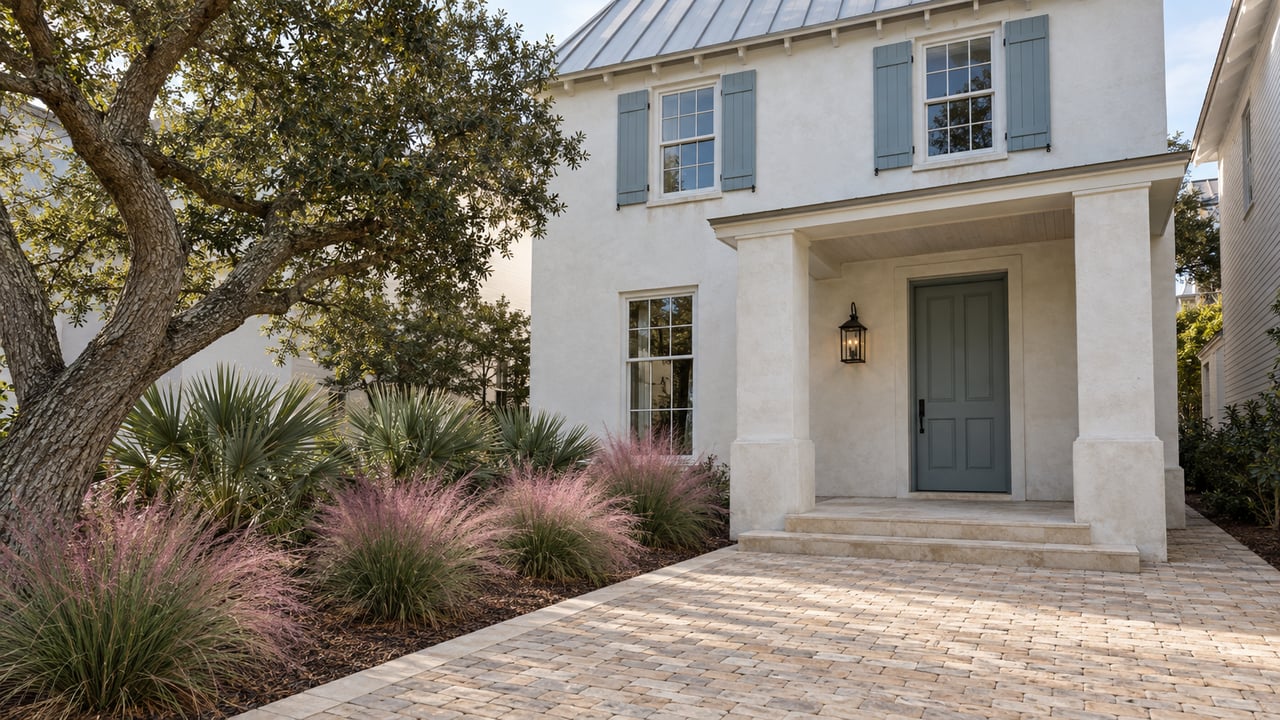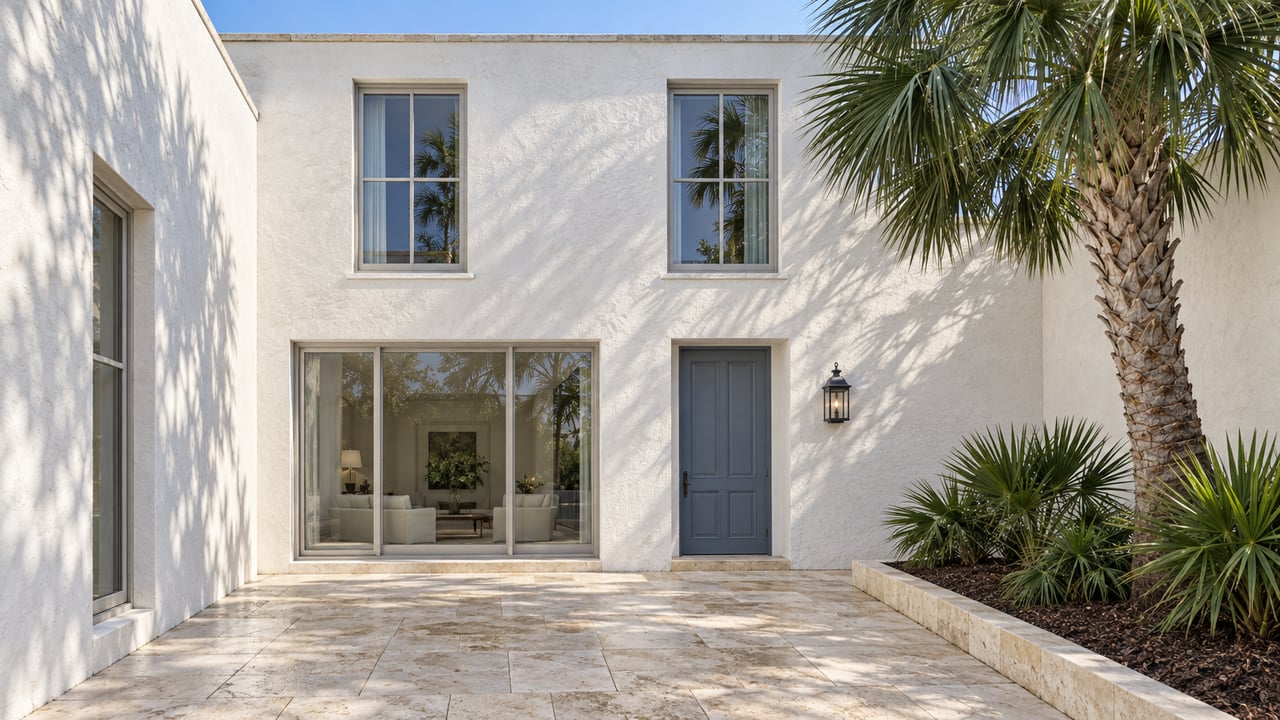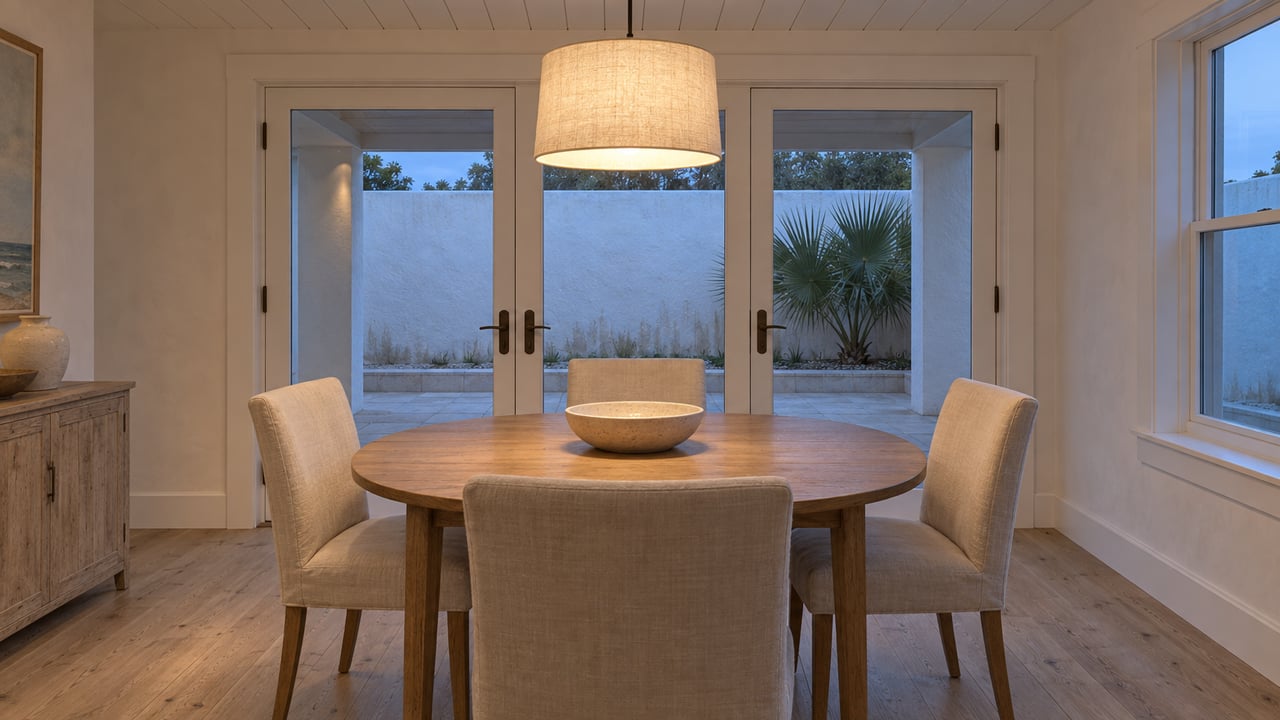
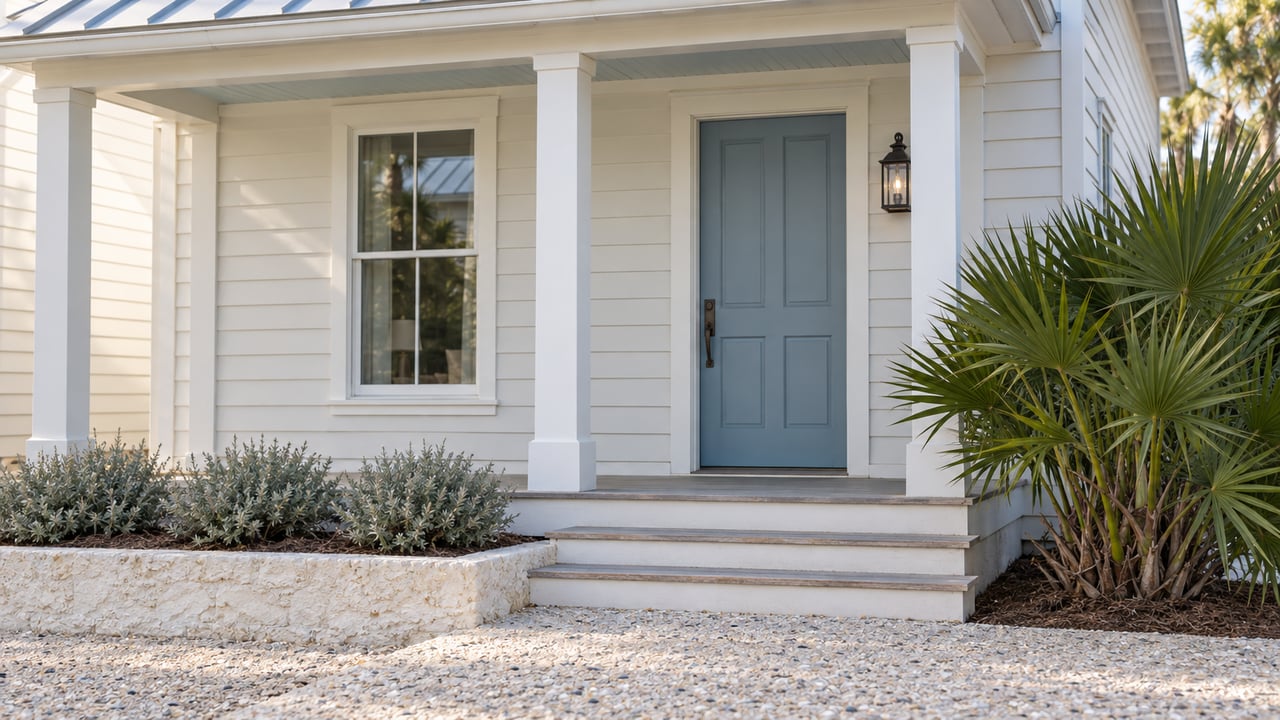
A Seaside renovation can involve both the county permit process and the town's design review. As of July 1, 2026, Adams and Reese says Florida law allows architectural review to take place without first obtaining a government building permit, while Seaside's design review remains governed by the town's regulations. Buyers planning updates should account for both processes.
If you're weighing a purchase with plans to update a kitchen, add a screened porch, or repaint a fence, that shift changes the order you should plan around, not just the paperwork.
Two Different Clocks
A Seaside renovation runs through two separate reviewers, and they don't move at the same speed or answer to the same rules.
Walton County's Building Division handles the government side: permits, plan review, and inspections against the current Florida Building Code, with projects submitted since the end of 2023 reviewed under that edition. If a lot sits seaward of the Coastal Construction Control Line, the Florida Department of Environmental Protection adds a third layer, and the county won't issue a permit without DEP's notice or exemption determination on file.
The second reviewer is the Seaside Architectural Review Committee, known locally as SARC. This is the town's own design layer, separate from the county and governed by Seaside's architectural regulations rather than the state building code. SARC's meeting records sort applications into categories: contractor approval, renovation, new construction, minor items, and field approval. Those categories show that review may occur at different stages of a project. Recent SARC minutes show approvals getting revised or rescinded as a project moves toward final sign-off, which means a plan that clears the committee once can still pick up conditions later.
These two clocks used to run in whatever order a given community's covenants dictated. That's the part that changed this summer.
How State Permitting Rules Interact with SARC Review
Florida lawmakers have spent the past two years leaning hard on permit timelines. PermitPlace says that under a state law effective January 1, 2025, single-family permits under $15,000 must be approved within five business days or they're deemed approved automatically. That's a real, enforceable clock on the government side of a renovation.
Nothing comparable exists for SARC. Seaside's own architectural regulations require an on-site mock-up wall panel before a color gets approved, a step that has no statutory deadline attached to it. A furniture swap or a fixture change might sail through in days. A repaint, a new fence, or a porch addition runs through a review process built around physical samples, committee meetings, and a code that treats color placement as a function of geography inside the town, with hues meant to run lighter near the Gulf and grow more saturated moving north.
For projects subject to both processes, buyers should account for the county permit process and Seaside's exterior review when planning a timeline.
What SARC Actually Reviews Before Anything Gets Painted
The specifics matter here, because they're not generic HOA boilerplate. Seaside's architectural regulations reserve white as a body color for civic buildings only, which rules out the simplest, most common coastal default for a private residence. Trim around openings is expected to run in a contrasting color, typically lighter and in high gloss, while trim around vents, meters, and light fixtures is expected to match the wall rather than stand out.
Fences have their own rulebook. They're required to be wood, painted white, with the exact shade pulled from an approved list in the code's appendix, and a fence pattern generally can't repeat another one on the same street, though a handful of plats are carved out as exceptions. Glass is expected to be clear; anything stained, frosted, or tinted needs separate approval. Shutters have to actually function, with hinges, tiebacks, and a latch, and the code specifies three permitted types: flat board, paneled, and louvered.
Buyers considering a pool should check Seaside's code before making plans.
None of this is arbitrary. The code was drafted by Duany Plater-Zyberk in the 1980s to hold together a streetscape built by dozens of different architects over four decades, and it regulates the town's shared visual language, not just individual lots. That's also why it reaches further into a renovation than most buyers expect on their first pass through a listing.
The Sequencing Rule That Changed on July 1
Here's the part that's genuinely new. Florida's HB 803, signed into law on May 7, 2026, amended Chapter 720 of the Florida Statutes to prohibit a homeowners' association, architectural review committee, or similar body from requiring that a government building permit already be issued as a condition of conducting its own architectural review. The provision took effect July 1, 2026.
Before that date, an association in a community structured this way could make an owner obtain the county permit first and only then submit plans for design review, stacking one waiting period on top of another in a fixed order. HB 803 removes that specific lever. An owner can now bring a project to architectural review without first clearing the government permitting process.
This sits alongside a 2024 amendment to Florida Statute 720.3035, which narrowed how far an architectural review committee's authority can reach in the first place. That statute limits review to what's specifically stated or reasonably inferable from a community's recorded declaration and prohibits a committee from reaching into interior work that isn't visible from the street, an adjacent parcel, or common areas.
Put together, the practical shift for a Seaside renovation is sequencing, not speed. You can now get SARC's read on a color scheme or a fence design before you've paid for engineering drawings tied to a permit application, which means a design the committee is likely to reject can surface earlier and cheaper than it used to.
Buying a House That's Already Been "Renovated"
This is where it gets relevant to a purchase decision rather than a construction one. A Seaside cottage that looks freshly updated in listing photos may have exterior work that never reached final approval. SARC's own categories distinguish between conditional, field, and final sign-off, and the committee's minutes show conditions attaching even late in a project's life.
Before writing an offer on a home with visible recent updates, it's worth asking the seller or listing agent for the property's SARC approval history, specifically whether prior exterior work reached final approval or is still sitting on an open condition. Interior updates like kitchens and baths tend to move through review more easily than exterior redesigns, but ask about the approval history for a paint job, a rebuilt porch, or a new fence.
A Few Straight Answers
Does the county permit timeline apply to SARC's design review? No. That rule applies to the government permit issued by Walton County, not to SARC's color and material review, which runs on its own schedule.
Can I skip SARC and just pull a county permit? Not for exterior work covered by Seaside's architectural regulations. The county permit and SARC review address different things, structural and life-safety compliance on one side, visual and material standards on the other, and both typically apply to the same visible project.
What should I check before planning a pool in Seaside? Review Seaside's code before making pool plans.
A Seaside purchase comes with a design code baked into the address, and knowing which approval to seek first can save real time on a renovation. If you're weighing a Seaside property with updates in mind, The Lauderdale Group can walk through a specific listing's approval history and help you sequence a renovation around both reviews before you write an offer.
This article is general information, not legal, tax or financial advice. Consult a qualified professional about your situation.